Mission Statement of Athlete Leadership

“To empower athletes to develop leadership skills and utilize their voices to assume meaningful leadership roles, influence change in the Special Olympics movement, and educate communities around the world that results in positive life changes.” – Vancouver Athlete Leadership Summit 2011

Overview

The purpose of Athlete Leadership is to empower athletes to develop leadership skills and utilize their voices to assume meaningful leadership roles, influence change in the Special Olympics movement and create inclusive communities. Special Olympics Rhode Island provides training and support for athletes who desire to expand their participation in Special Olympics, both on and off the competition field. Through Athlete Leadership, athletes receive training and have opportunities to hold positions of leadership and influence.

Athlete Leadership allows Special Olympics athletes to help shape the future of the Special Olympics movement and ensure all people with intellectual disabilities have the opportunity to participate in sports training and competition that is fun and fair.  If you’d like to participate, please contact Mary-Ellen Powers.

How to Become an Athlete Leader:

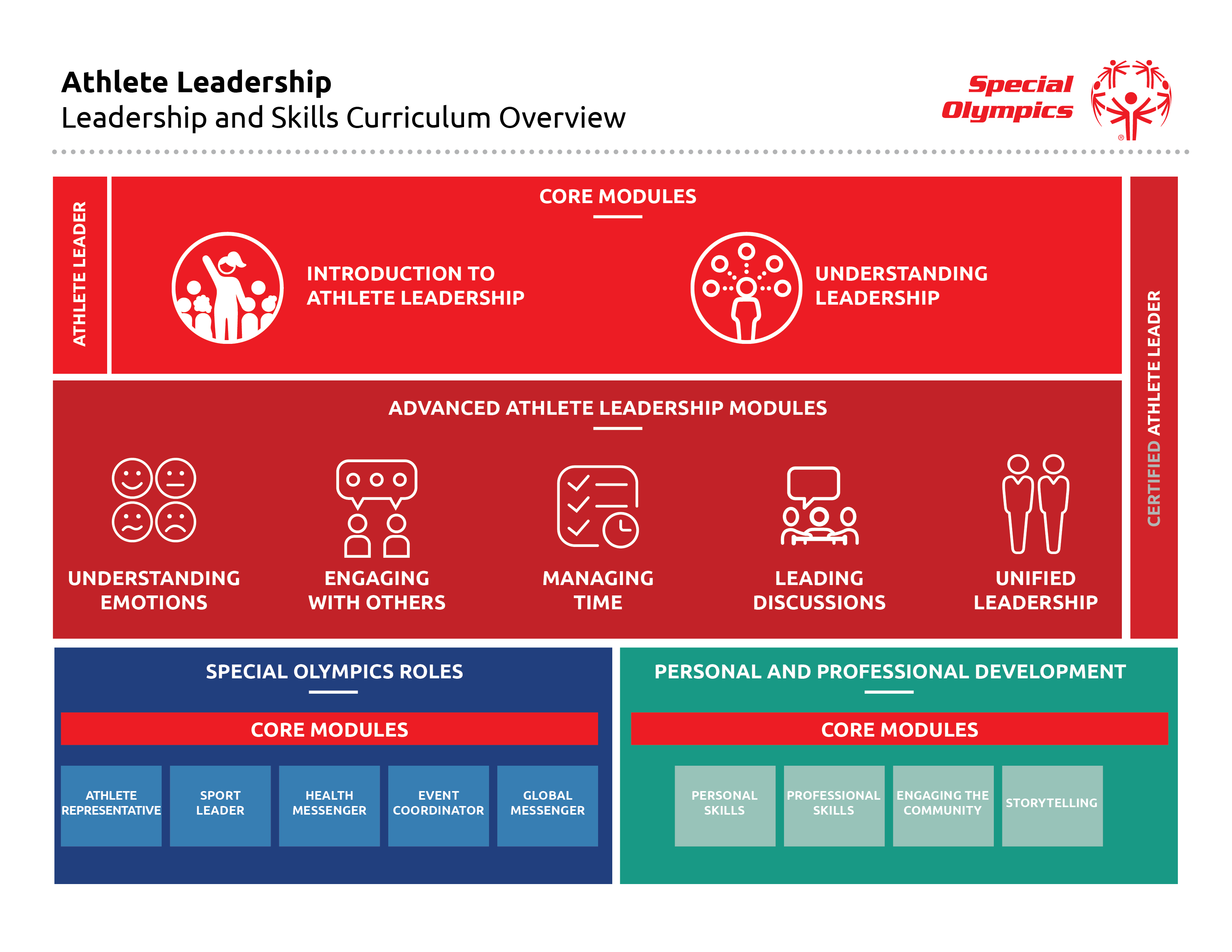
Athlete Leadership trainings will be held in person and explore a variety of topics designed to build confidence and leadership skills. To get started, athletes are required to complete two core modules that provide a strong foundation in leadership and help them see themselves as leaders who can make an impact within Special Olympics and their communities.

Introduction to Athlete Leadership introduces the three principles of athlete leadership, including Unified Leadership, and helps athletes begin identifying the leadership roles they’re most interested in.

Understanding Leadership defines what leadership is, highlights the qualities of effective leaders, and introduces six essential leadership skills woven throughout all trainings: communication, decision-making, adaptability, relationship building, action focus, and continuous improvement.

After completing both core modules, athletes can register for additional courses such as Athlete Representative, Athlete Spokesperson/Global Messenger, and Health Messenger.

Leadership Opportunities at SORI:

→ Athlete Leadership University

Athlete Leadership University is a structured series of courses for athletes who want to become — or continue growing as — Athlete Leaders. Participants will choose a “Major,” focusing on the leadership role they’re most interested in pursuing.

Available Majors include:

  • Athlete Spokesperson (formerly known as Global Messenger)
  • Athlete Representative (serving on committees)
  • Healthy Athletes Messenger (serving as a health ambassador for Special Olympics Rhode Island and their team)

Each Major includes a total of seven courses, divided across two semesters, to help athletes build the skills and confidence needed to succeed in their chosen role.


Athletes as Members of Board of Directors

Athletes have the opportunity to serve as Board members for a three-year term. In this role, they are expected to attend Board meetings, which typically last 1–2 hours, and contribute input when appropriate.

To be considered, Special Olympics athletes must submit a letter of interest along with a resume highlighting their Special Olympics involvement and relevant work or life experience to Edwin Pacheco, President & CEO.


Athlete Leadership Council

An open forum where athletes can connect to discuss important topics and issues, share their perspectives, and use their voices to help shape and influence change within SORI on key initiatives and events.


Athletes on Committees

Athletes can serve on a variety of committees—such as the Athlete Newsletter Committee, Games Management Teams, Fundraising Committees, Torch Run Committee, and Marketing & Communications Committee—where they provide valuable input and help represent the athlete voice.


Athletes as Coaches

Special Olympics athletes have the opportunity to become certified coaches and support fellow athletes. They may choose to coach a sport they have previously competed in or one they are interested in learning more about. Like all coaches, athletes must complete the required coaching education program to become certified in their chosen sport. Please note that athletes are not permitted to compete in the sport they are coaching.